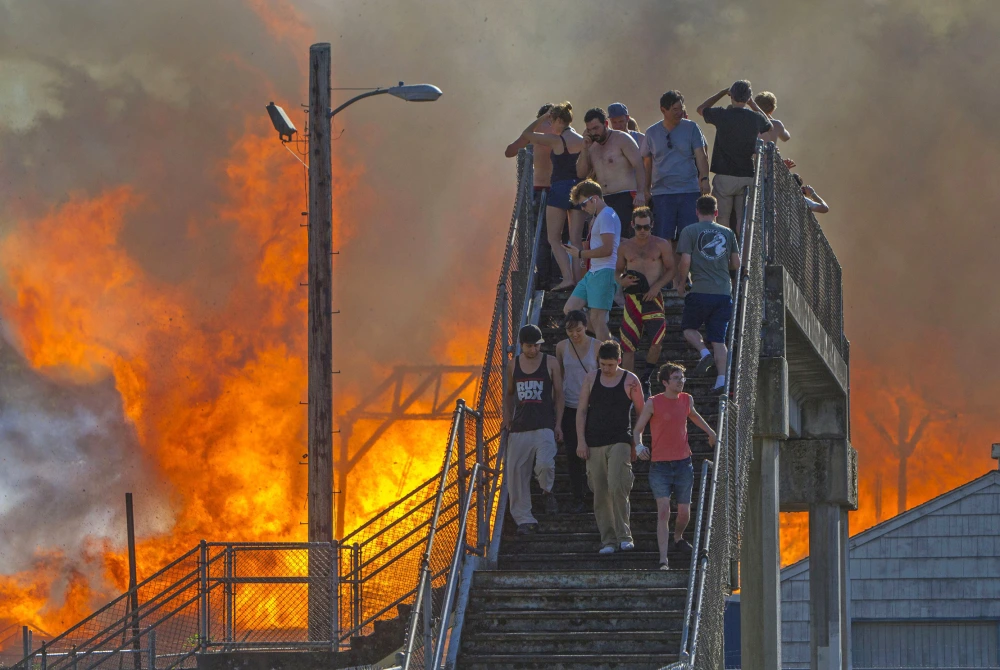
On June 29, 2015, Eugene, Oregon, witnessed the tragic destruction of its historic Civic Stadium—a cherished wooden ballpark that had stood since 1938. The fire not only erased a significant landmark but also deeply affected the community that had long associated the stadium with local sports and communal gatherings.
A Blaze That Shook Eugene
The fire erupted in the early evening, with flames rapidly engulfing the aged wooden structure. Firefighters were alerted around 5:30 PM and arrived to find flames soaring twice the height of the stadium. The dry, seasoned lumber that comprised much of the stadium’s construction facilitated the swift spread of the fire, making containment challenging. Smoke from the blaze was visible throughout Eugene, underscoring the severity of the incident.
As the fire raged, emergency responders evacuated a two-block radius around the stadium to ensure public safety. Despite the intensity of the blaze, no injuries were reported—a testament to the prompt actions of local authorities.
Community’s Heartbreak
The loss of Civic Stadium resonated deeply within the Eugene community. Hundreds of residents gathered near the site, witnessing the destruction of a venue that had hosted countless memories over the decades. Some onlookers reportedly sang “Take Me Out to the Ballgame,” reflecting the collective grief and nostalgia felt by many.
Longtime residents recalled personal experiences tied to the stadium. Tom Bowen, who played baseball there in 1945 and later coached at Sheldon High School, expressed profound sadness, noting the emotional connection many had with the venue.
Historical Significance of Civic Stadium
Constructed during the Great Depression, Civic Stadium was approved by voters in 1938. Labor for its construction was provided by the Works Progress Administration, and materials were donated by local lumbermen. Over the years, the stadium became a central hub for sports in Eugene, serving as the home field for the minor league team, the Eugene Emeralds, from 1969 until their departure in 2009.
Beyond baseball, the stadium hosted various community events, solidifying its status as a cultural landmark. Its wooden architecture was emblematic of a bygone era, making it one of the few remaining wooden ballparks in the United States before its destruction.
Circumstances Leading to the Fire
Investigations revealed that the fire was accidentally started by four boys, aged 10 and 12, who were playing with fire in the stadium’s press box. As the flames grew uncontrollable, the boys fled the scene, leaving the fire to spread rapidly through the wooden structure. The parents of a fifth boy, who had left before the fire started, later informed the authorities, leading to the identification of the culprits.
Legal Repercussions
The four boys involved faced legal actions following the incident. They were charged with first-degree arson and reckless endangerment, adding to earlier counts of criminal mischief and reckless burning. The severity of the charges underscored the significant impact of their actions on the community and the loss of a historic landmark.
Future of the Site
In the aftermath of the fire, the Eugene Civic Alliance, a nonprofit organization that had purchased the stadium earlier in April 2015, expressed profound grief over the loss. The alliance had plans to renovate the stadium into a multi-sport venue, with construction scheduled to commence the following month. The fire disrupted these plans, prompting the organization to reassess its approach to revitalizing the site.
Despite the setback, efforts to revitalize the site continued. The new Civic Park was designed to replace the old stadium, incorporating modern facilities while honoring the legacy of its predecessor. Materials reclaimed from the original stadium were integrated into the new project, such as wood used for indoor benches and reception areas. The design also included vibrant colors and updated amenities, aiming to serve the community for generations to come.
Reflection on the Loss
The destruction of Civic Stadium was more than just the loss of a physical structure; it represented the end of an era for many in Eugene. The stadium had been a repository of collective memories, from thrilling baseball games to community gatherings. Its absence left a void, prompting reflections on the importance of preserving local landmarks and the stories they embody.
As the community moved forward, the incident served as a poignant reminder of the fragility of cherished institutions and the enduring spirit of a community united in both joy and adversity.